After Hours Newsletter
What did you have for breakfast?
This week Dr. Vincent and Stephen get into the
most important meal of the day- breakfast. Or is it?
Stephen also wanted to call out that the start of our podcasts over the last few weeks has been a little bumpy, and we’re working on a long term solution to make the first few minutes a little neater.
Contents
Last week, on the podcast
Stepping through breakfasts from around the world, and the impact of ultra-processed food on our health
This episode is a wide-ranging discussion through breakfast, ultra processed food and culture, with Stephen and Dr. Vincent using everyday examples to unpack why modern food looks the way it does and what that means for long-term health.
The tone stays conversational and a bit cheeky, but the backbone is a practical question: how do busy people make better choices in a system that is increasingly engineered to push sugar, fat and convenience into every corner of the day.
They begin by anchoring the whole discussion in breakfast, not in a dogmatic “most important meal of the day” way, but as a useful lens for seeing how food science nudges our decisions.
Stephen shares his own routines, and Dr. Vincent is disarmingly open about skipping breakfast to “bank calories” because of growing up overweight and counting every kilojoule, which sets up a recurring theme of food, body image and self-talk rather than just nutrients.
From there they dive into cereals, using Weet-Bix, Cornflakes and Sultana Bran as the “heritage” staples and contrasting them with Nutri-Grain, Coco Pops, Froot Loops and Milo cereal to show how branding quietly positions ultra processed products as wholesome and sporty.
They tease apart tricks in names like “Nutri-Grain” and “Froot Loops”, and Dr. Vincent highlights how loose claims like “made with whole grain” really are, arguing that reading the box is now more about decoding marketing than understanding nutrition.
That opens into a bigger conversation about how different food cultures calibrate “normal”, particularly when comparing Australia and the United States. Dr. Vincent walks through examples like pasta sauce, bread and mince, showing how higher sugar and fat baselines in US products mean you can eat the “same” foods as in Australia and still take in 10 to 15 percent more calories, which he links to the prominence of GLP-1 drugs like Ozempic in the US.
Stephen then takes listeners on a quick lap of global breakfasts – Turkey, Singapore, France, Sri Lanka, Greece and Japan – to make the point that food cannot be separated from culture, labour and lifestyle.
Throughout that tour, Dr. Vincent keeps coming back to the idea that we focus too much on “food safety” and calories and not enough on whether food actually nourishes us.
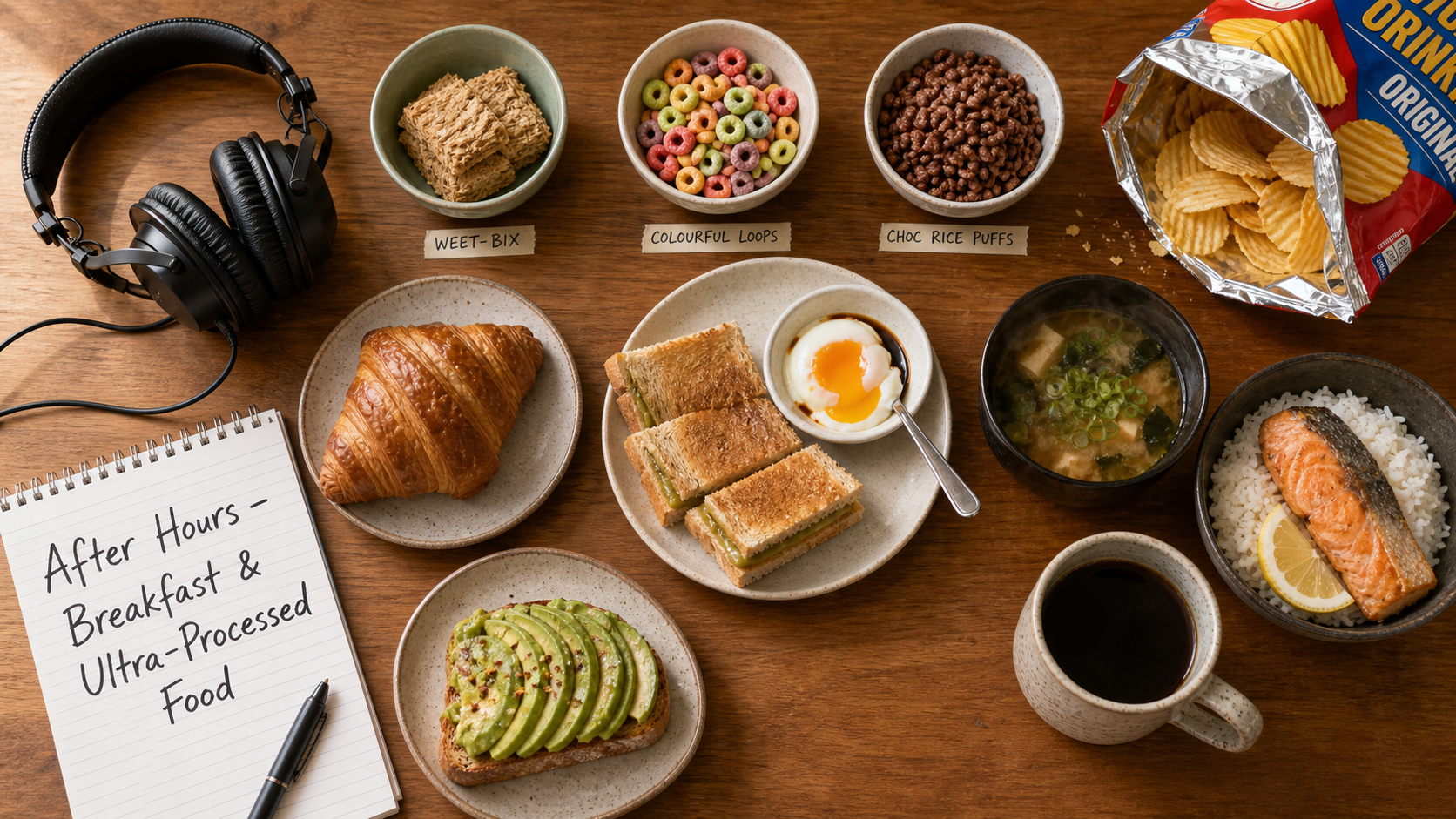
Japan becomes their positive counter-example of a culture that treats food with deep respect and traceability, illustrated by a bowl of fluorescent green wakame that comes with a ten-minute story about where it was picked, how it was dried and even what water rehydrated it.
Some geographical tension leads into some of his most pointed comments about ultra processed food: the technology itself is not inherently bad, it is how that technology is used and if additives impact the health benefits of those foods.
He explains that without large-scale processing a huge portion of the world would go hungry, but the problem now is engineering foods to be “soft”, rapidly absorbed and optimised to stimulate dopamine and overconsumption, which is why once you open a packet of chips stopping feels like a psychological battle rather than a simple choice.
Stephen pulls things back from that cliff edge with a grounded question: for a parent in a supermarket with kids hanging off the trolley, what are three simple things they can check to make better decisions, even if they still buy processed foods.
Dr. Vincent answers very clearly: start with sugar, fat and salt on the label, then add country of origin, because Australian standards for residues and composition mean the “entry level” option here is often healthier than equivalents in other markets.

In closing, they pull the threads together around agency, community and what “better” looks like in the real world.
Dr. Vincent underlines that foods like Weet-Bix or tofu are technically processed or even ultra processed yet can still be healthy and essential, especially for vegans and vegetarians, which is why he keeps coming back to balance, context and provenance instead of purity.
Stephen links the conversation back to their broader community work – the podcast, the evolving newsletter, giving people practical tools rather than guilt – while Dr. Vincent thanks listeners directly, positioning this as a long-term shared project of learning how to eat in ways that respect both our bodies and the systems that feed us.
Here are a few of Dr. Vincent’s key ideas on community, health and ultra processed foods:
- On ultra processed technology and community health: his central argument is that the real issue is not processing itself but the way products are “tailored and engineered, especially to make you want more,” turning a technology that could feed the masses into a money-making machine that quietly undermines public health.
- On nourishment versus safety: he draws a sharp line between food that is safe and calorie-dense and food that is truly nourishing, using something like “a pack of Doritos” as an example of a product that ticks boxes on energy and added vitamins but still fails the test of supporting long-term health and wellbeing.
- On ultra processed foods and addiction-like design: his explanation of “soft food” – easy to eat, rapidly digested, spiking blood sugar and dopamine; reframes chips, cereals and snack foods as deliberately designed to bypass normal satiety, which is a powerful insight for anyone trying to eat more deliberately.
- On balance and fairness: he is explicit that it can feel “arrogant and pompous” to preach perfect fresh food while hunger still exists, and that the real challenge is finding a balance where processing helps feed people without exploiting them, which is a deeply community-minded way to frame the problem.
Stephen asks Dr. Vincent...
Stephen: "For people listening in both Australia and the US who are worried about their weight and maybe even considering GLP-1 medications, what are one or two realistic changes to breakfast and ultra-processed food that actually move the needle over the next 12 months, not just the next week."
Ultra-processed foods are not just “empty calories”; large reviews now following millions of people show that higher intake is consistently linked with more obesity, type 2 diabetes, heart disease, some cancers, depression and earlier death, with no evidence of any health benefit from eating more of them.
In controlled trials, when people are given ultra-processed diets matched for calories and nutrients on paper, they still tend to eat more and gain weight, which tells us the problem is baked into how these foods are formulated.
We also have growing neuroscience showing that highly processed, “soft” foods that combine refined starch, sugar and saturated fat can hijack the brain’s reward circuits in ways that look a lot like addictive patterns.
That does not mean everyone is “addicted” to cereal or chips, but it does explain why so many people feel they cannot stop at one bowl or one handful – the textures and flavours are designed to be frictionless to eat and to keep us coming back.
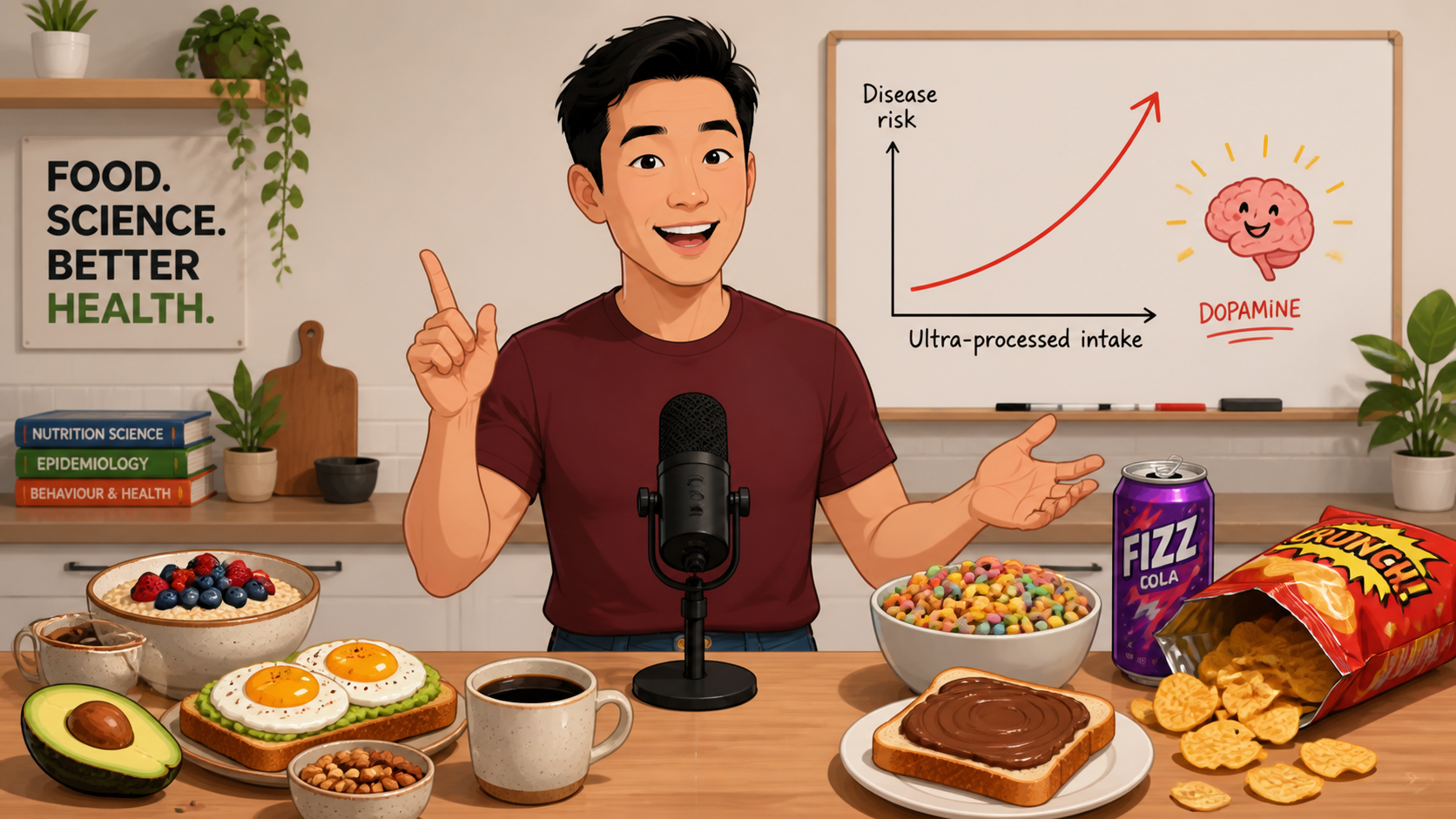
Breakfast is a useful leverage point because it is often the first food decision of the day and shapes what happens for the next 8–12 hours. Large prospective studies and meta-analyses suggest that people who regularly eat a breakfast with more protein and fibre – rather than just refined starch and sugar – tend to have lower body weight and lower cardiometabolic risk over time, compared with habitual breakfast skippers or those relying on very sugary options.
For someone in Australia or the US, that might simply mean swapping a very sweet cereal for a lower-sugar, higher-fibre one with yoghurt and nuts, or choosing eggs on decent bread instead of a dessert-like spread on white toast.
For anyone worried about weight or contemplating GLP-1 medications like Ozempic, the strongest evidence still supports building a base of minimally processed, plant-rich eating with adequate protein, plenty of fibre and a deliberate cut in ultra-processed products, especially those “soft”, easy-to-overeat combinations of refined starch, sugar and fat.
A few realistic moves like trading one snack food for a less processed option, checking sugar, fat, salt and country-of-origin on labels may not transform things in two weeks, but over 12 months they compound into better weight, better energy and lower disease risk.
The Coffee Conundrum
Is Stephen’s long black doing him harm?
Is coffee actually good or bad for my heart?
On balance, moderate coffee looks more like a health-supporting habit than a guilty pleasure.
Large long-term studies link roughly two to four coffees a day with lower overall mortality and a lower risk of cardiovascular disease and type 2 diabetes.
What is cafestol, and why should I care how I brew?
Cafestol is a fat-like compound in coffee oils that nudges the liver to produce more LDL cholesterol. Paper filters trap most of it, while French press, boiled and other unfiltered methods let more cafestol into the cup, which is why heavy unfiltered coffee drinking can raise LDL in clinical trials.
So Stephen should be aware that his extra strong espresso might be raising his cafestol levels.
Does that mean my daily flat white in Sydney is a problem?
Probably not for most people.
Typical Australian café coffee is espresso-based and served in small cups, so the absolute cafestol dose per drink is modest compared with large volumes of French press or boiled coffee, especially when that espresso is diluted with milk or water.
If someone is drinking big mugs from a French press, percolator or a high-cafestol office machine several times daily, their cumulative diterpene dose can be high enough to nudge LDL cholesterol up in the same ballpark as adding butter to their diet or partially undoing a low-dose statin.

How does this play out in different coffee cities, like Sydney and Chicago?
A Sydney local on two small flat whites is getting moderate caffeine and relatively low cafestol.
A Chicago drinker on large paper-filtered pour-overs may get even less cafestol overall but more caffeine by volume; in both cities, litres of unfiltered coffee are the bigger concern than the postcode.
What are the simplest rules of thumb I can actually use?
If you love French press or boiled coffee, keep it as an occasional ritual rather than an all-day habit. If your cholesterol is borderline or you take a statin, make your everyday brew a paper-filtered coffee or an espresso-based drink, and aim for roughly two to three moderate coffees a day.
Is there any real health difference between a long black and a latte, or is it just about how much milk you like in your coffee?
A long black is essentially espresso plus hot water, so it delivers caffeine with almost no calories unless you add sugar. A latte layers the same espresso shot with a substantial amount of milk, which adds energy, protein and some natural sugar. For most people, the main health difference is therefore calories and how many of those milky coffees they drink each day, rather than a big change in cafestol or cholesterol impact.
Cold brew has a “clean” reputation, but should I be thinking about cafestol and cholesterol as well as caffeine?
Cold brew often uses long contact times with coffee grounds, which can pull more oils into the final drink. If it is made and served through a paper filter, cafestol levels stay low, much like other filtered coffees. When it is brewed or served unfiltered in large volumes, regular heavy drinkers may need to think about both total caffeine and the potential extra cafestol load, especially if their cholesterol is already borderline or they have cardiovascular risk factors.
It’s all about where it’s grown
High-altitude Arabica (roughly above 1,200 metres) grows in cooler conditions, ripens more slowly and produces denser beans with more concentrated sugars and organic acids, which usually translates into brighter acidity, more aroma and a “cleaner” flavour profile that specialty roasters love.
Low-altitude coffee grows faster in warmer lowland climates, giving softer, less dense beans that tend to taste smoother, sweeter and more chocolatey but with lower acidity and less complexity, and they are often used in blends or higher-volume commercial coffees because yields are higher and farming is easier.
The soil also has significant impact on the finished product - it holds the minerals, water and microbes that shape how the plant grows, how sweet the cherries get and how dense the beans become, and all of that shows up in the cup.
Rich, well-balanced soils that supply enough nitrogen, phosphorus and potassium tend to produce healthier trees and beans with better sweetness, structure and acidity, whereas nutrient-poor soils are more likely to give flat or muddled flavours.
Healthy “living” soil, full of microorganisms that recycle organic matter, seems especially important in specialty coffee, because it makes nutrients more available and supports trees that can ripen cherries slowly and evenly, which is where a lot of the nuance in high-end beans comes from.
Affogato - another cold coffee option
A brief history
Affogato is a relatively modern Italian dessert, and its name literally means “drowned”, referring to ice cream or gelato being “drowned” in hot espresso.
Traditionally it was served as a simple post-meal treat at the bar rather than a formal plated dessert, and it has since travelled with Italian café culture around the world, picking up local variations such as different ice-cream flavours or a splash of liqueur.
How to make an affogato
Place one or two scoops of good-quality vanilla ice cream or gelato into a small chilled glass or bowl.
Pull a fresh shot of espresso, around 25–30 ml, and immediately pour the hot coffee over the ice cream.
Serve at once so that you keep the contrast between hot and cold; if you like, you can finish it with a little grated dark chocolate, a few chopped nuts or a small splash of your favourite liqueur.
Product of the week

Winter Essentials Pack
Each year the change of seasons brings dry air, harsh
weather, indoor heating and increased exposure to
seasonal illness which leaves you feeling depleted and
your skin looking tired, dull and dehydrated.
The Winter Essentials Pack combines targeted immune
support with antioxidant-rich skincare to help you look
and feel your best throughout the colder months.
- 1.
- APSKIN Face Cleanser
- 2.
- APSKIN Face Serum
- 3.
- APSKIN Face Cream
- 4.
- APSKIN Face Mist
- 5.
- Immunity Plus+
Powered by patented Activated Phenolics, naturally
extracted from exclusively grown Australian apples, these
unique natural actives deliver potent antioxidant protection
to help reduce oxidative stress, calm inflammation and
support overall wellbeing.
Together, they create the perfect daily ritual to keep your
skin healthy, hydrated and glowing while supporting a
strong immune system throughout winter.
For all skin types. All APSKIN skincare products are vegan, not tested on animals and ethical.
Meet your hosts
Your hosts for After Hours with Dr Vincent are Vincent
and Stephen!
Vincent’s is passionate about good health and longevity,
and believes that good health shouldn’t be complicated,
gatekept, or expensive. He has seen first hand that
science can be kind, and that we all learn better when
we’re learning together.
We all deserve to be healthier and happier.
Stephen is a widely travelled IT leader who is always curious. He has a bunch of unfinished projects, a startup he needs to spend more time on, and friends he loves to cook for, go ocean swimming with, and laugh with. He lives in the Inner West of Sydney with his wife and their two cats.

About this newsletter and podcast
This newsletter is produced weekly to accompany the After Hours with Dr. Vincent and Stephen podcast, available everywhere you get your podcasts. Focused on health, longevity and the occasional technical discussion, Dr. Vincent and Stephen record the podcast weekly running live to TikTok and then post production to all other platforms.
The newsletter is written in LaTeX using TexStudio in a Ubuntu desktop environment. Podcast/Vodcasts are compiled using kdenlive, ffmpeg and melt. Wherever possible we use OpenSource and will always attribute assets where possible. Stephen uses a qwen3.5:9B model LLM running with ollama, OpenwebUI and comfyUI for images.
_________________________________________________________________________
You’re receiving this weekly newsletter because you’re one of
our very special subscribers! If you’re not currently a
subscriber, head to our page on Substack for more of our
content, free downloads and special subscriber offers.
Ask Dr.Vincent on Substack
Want to sponsor?
Both Dr. Vincent and Stephen are thrilled you’re interested in supporting this platform. You can reach out to us by emailing hello@askdrvincent.com asking for more information around sponsorship of the podcast, the newsletter, or both! Your support keeps us on air.
We’re also available for speaking engagements at conferences or meetups pending availability and an engagement agreement.
Looking for our online newsletter?
Stephen and Dr. Vincent have given the newsletter a bit of a glow up, and after some feedback from some of our regular readers we’ll also publish a web version of this newsletter. Same content, same images, same Dr. Vincent - just in your favourite browser.
Head over to After Hours Online for the latest newsletter.
© 2026 Dr Vincent and Stephen. All rights reserved. Brief excerpts may be shared with attribution and a link to askdrvincent.com.