After Hours Newsletter
Looking forward to spring!
It’s hard to believe that in Sydney next week we’re looking at top temperatures of 27 and 28 celsius, which is HOT HOT HOT for Sydney in Spring.
- Dr. Vincent and CoachAndrew continue to spice up the airwaves: Subscribe here!
- Dr. Vincent is headed back to the USA next week, this time for a number of important business meetings, we can’t wait to hear the news!
- As the seasons start to turn some of us (Stephen this is for you!) start to think about outdoor exercise again.
Contents
Last week, on the podcast
An introduction to protein and a discussion about how it’s used in the body
This week’s After Hours with Dr Vincent and Stephen takes aim at protein’s transformation from essential nutrient to marketing badge.
Stephen and Dr Vincent begin with the familiar supermarket trick: products from breakfast cereal to chocolate bars are dressed up with words such as high protein, inviting shoppers to read the claim as shorthand for health.
Their argument is not that protein is unimportant. It is indispensable, involved in tissue repair, muscle maintenance and countless bodily functions.
The problem, as Vincent puts it, is the leap from contains protein to is a healthy food.
The discussion moves quickly beyond the old idea that protein simply means steak.
Dr Vincent explains that protein comes from animal and plant foods, while Stephen presses him on the practical question for ordinary eaters: what does a vegetarian or vegan actually need to do? Vincent’s answer is that a plant-based diet can work, provided it is varied and deliberately planned to cover essential amino acids and other nutrients.
He is less persuaded by the idea that health requires eliminating animal foods altogether, arguing instead for meals in which plants occupy most of the plate and animal foods, if eaten, play a supporting rather than starring role.
That is the first significant point of tension.
Stephen is interested in the broad evidence that plant-forward diets tend to be associated with better health outcomes, while Vincent maintains that people should not mistake this for a universal instruction to go fully plant-only.
He argues that biology, culture, individual needs and activity levels complicate any one-size-fits-all rule.
They arrive at a practical middle ground: variety matters more than dietary tribalism, and the Australian approach of recognising lean meat, fish, eggs, tofu, legumes, nuts and seeds as protein choices remains a useful starting point.
Protein supplements get a more sceptical hearing.
Dr Vincent explains why whey became the dominant powder in the category: it was historically a difficult dairy by-product from cheese-making, later turned into a profitable, portable product.
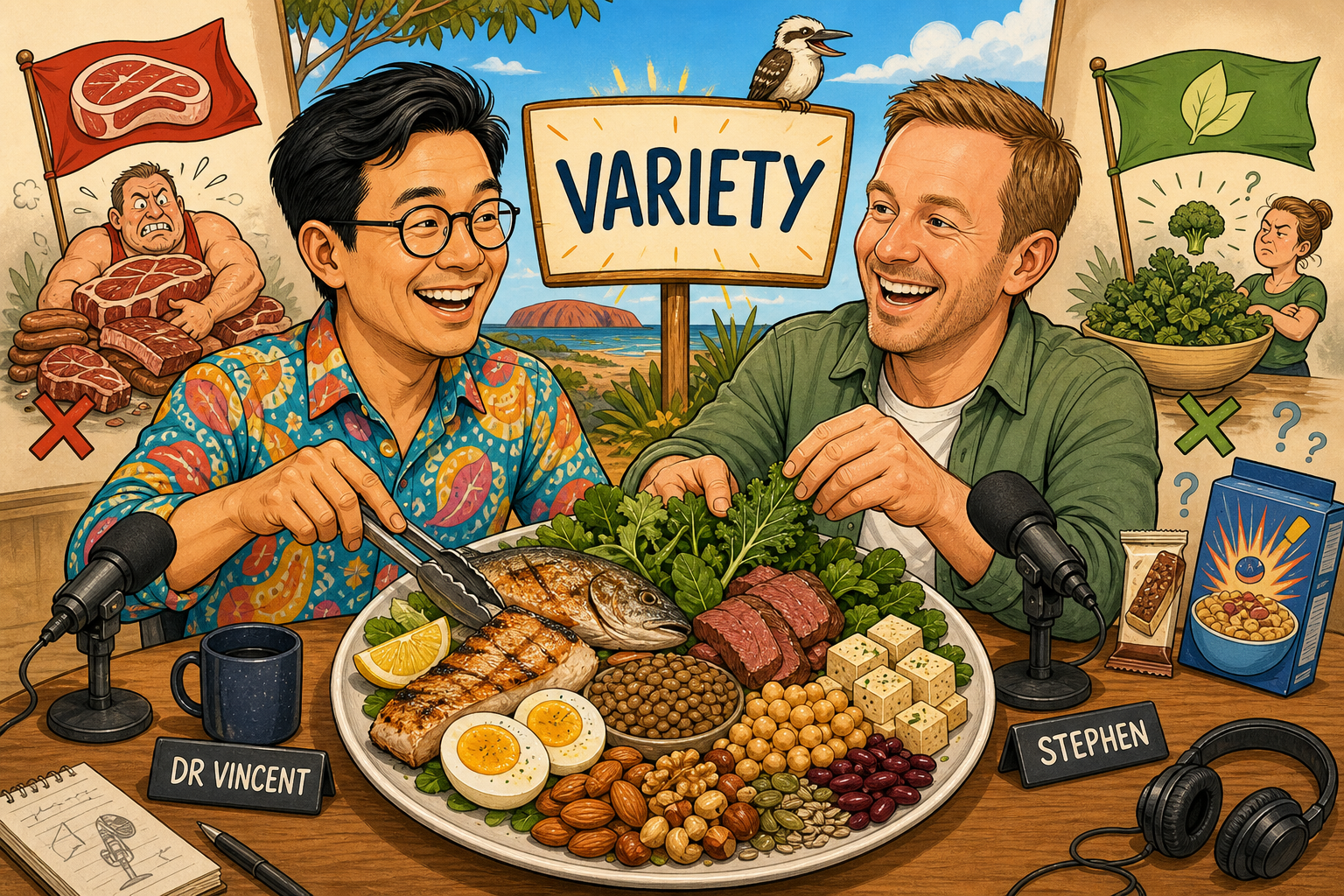
He does not dismiss protein powders outright, particularly for people with high physical demands or athletes who struggle to eat enough protein from meals. But Stephen’s question about whether high-protein cheese is a shortcut to muscle allows Vincent to make the central point: protein does not build muscle by magic.
Resistance training, physical work and normal movement create the demand for repair. Food supplies the materials; it does not do the work on its own.
The pair are particularly wary of food products that borrow the language of fitness without delivering the benefits consumers imagine.
Vincent points out that a protein bar, shake, cereal or confectionery can legally contain the protein written on its label while still being nutritionally inferior to an ordinary meal.
Stephen contrasts a protein bar with a meal of salmon, Greek yoghurt and lentils, noting the obvious differences in fibre, sodium, saturated fat, micronutrients, processing and cost. Vincent’s analogy is blunt: seeing nutrients listed on a packet does not mean the body will necessarily absorb and use them in the same way as nutrients delivered in a whole-food matrix.
The episode also wanders into the wider diet industry, where the disagreement is less about whether people deserve help and more about what counts as help.
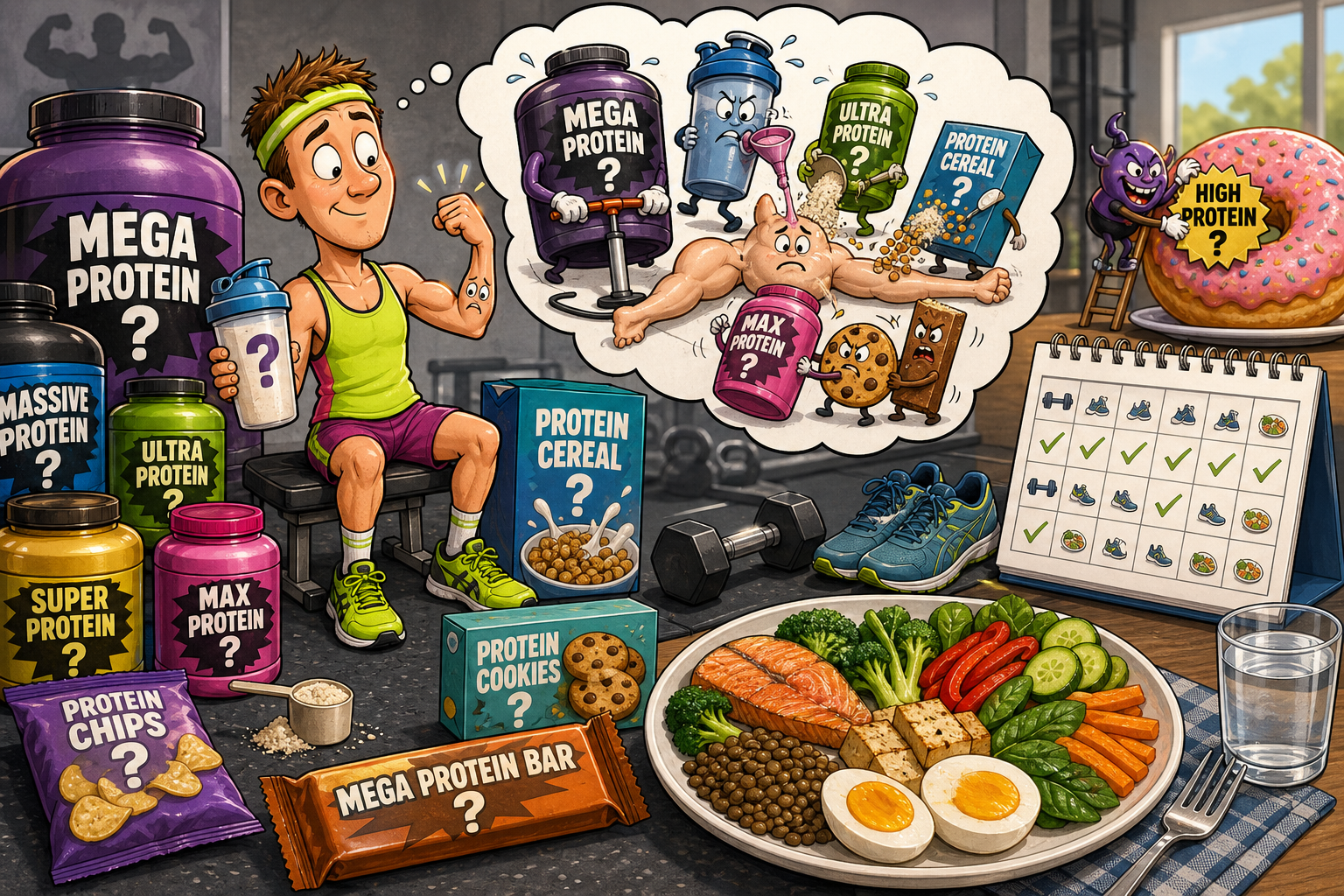
Dr Vincent is sharply critical of crash diets, detox products, laxative and diuretic-led weight-loss schemes, and the false reassurance offered by rapid changes on the scales.
His view is that any regime which cannot be maintained is not a sustainable diet at all. Stephen agrees with the importance of behaviour and environment, while drawing attention to the fact that dieting is never just about a list of permitted foods. It is shaped by routines, social conditions, activity and the practical reality of what people can maintain.
Their most pointed exchange concerns Ozempic and other weight-loss medication.
Vincent rejects the language of cheating as an especially useful way to describe medical weight loss, but he is concerned that medication can produce a result without resolving the behaviours, circumstances or health issues behind weight gain.
He challenges a comparison between weight-loss medication and smoking-cessation treatments, arguing that food is not optional in the way cigarettes are.
Stephen does not mount a full defence of the medication, but his questioning makes room for the complexity: people should not be casually judged for seeking treatment, even as the long-term question of behaviour, nutrition and weight regain remains unresolved.
By the end, the episode lands where it began: scepticism of simple answers.
Dr Vincent warns against carnivore, keto, Paleo and other restrictive templates when they are treated as universal solutions, especially for people with pre-existing health risks.
Stephen returns to the less glamorous conclusion that protein is best understood as one part of a broader diet, not a personality, a miracle ingredient or a licence to ignore everything else on the nutrition panel.
The shared message is refreshingly unsexy: eat a varied diet, favour recognisable foods, match protein intake to your body and activity, and treat the words high protein on a packet as the beginning of a question, not the answer.
Protein: from survival to the supermarket
Sixty thousand years ago, humans obtained protein from whatever their local landscape reliably offered: hunted mammals and birds, fish and shellfish, eggs, insects, and seasonal plant foods such as nuts, seeds and legumes.
Perhaps contrary to popular belief there was no single "Palaeolithic diet"; a coastal group, a desert group and a forest group faced radically different food supplies.
What they did share was a diet shaped by season, geography, hunting success and food preservation skills, rather than permanent access to any one protein source.
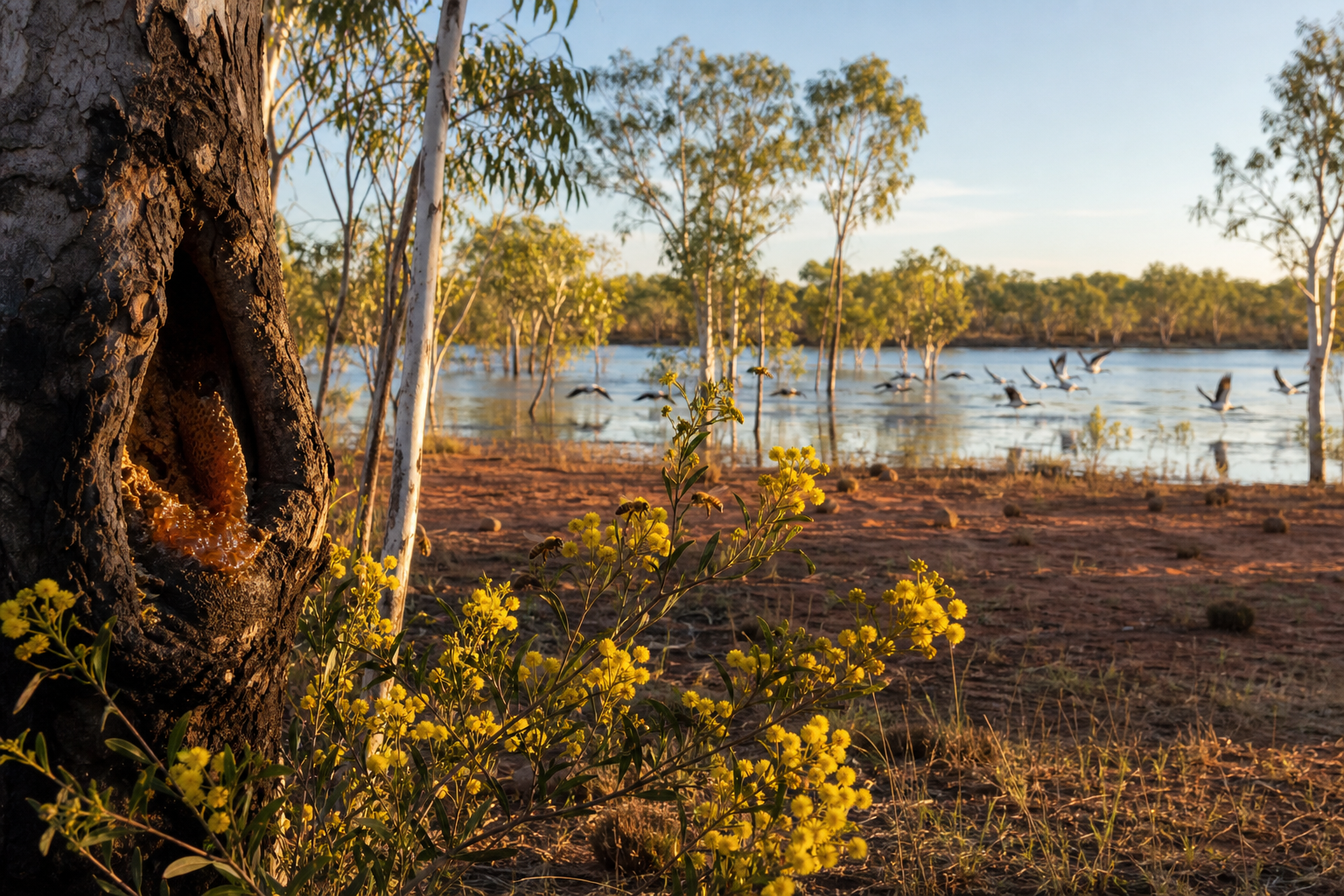
In western Arnhem Land (Australia), Kunwinjku seasonal knowledge connects flowering plants and active native bees with the collection of sugarbag, a valuable energy-rich food.
Later, in the hot, dry Kurrung period, drying floodplains and billabongs make it a productive time to hunt protein-rich waterbirds such as magpie geese, as well as northern long-necked turtles and Arafura filesnakes.
In the Daly River region, MalakMalak and Matngala knowledge recognises the flowering of Cochlospermum fraseri as a signal that freshwater crocodile eggs are ready to collect. Here, the flowering plant provides the seasonal information, while the eggs provide the complete protein, fat and micronutrients.
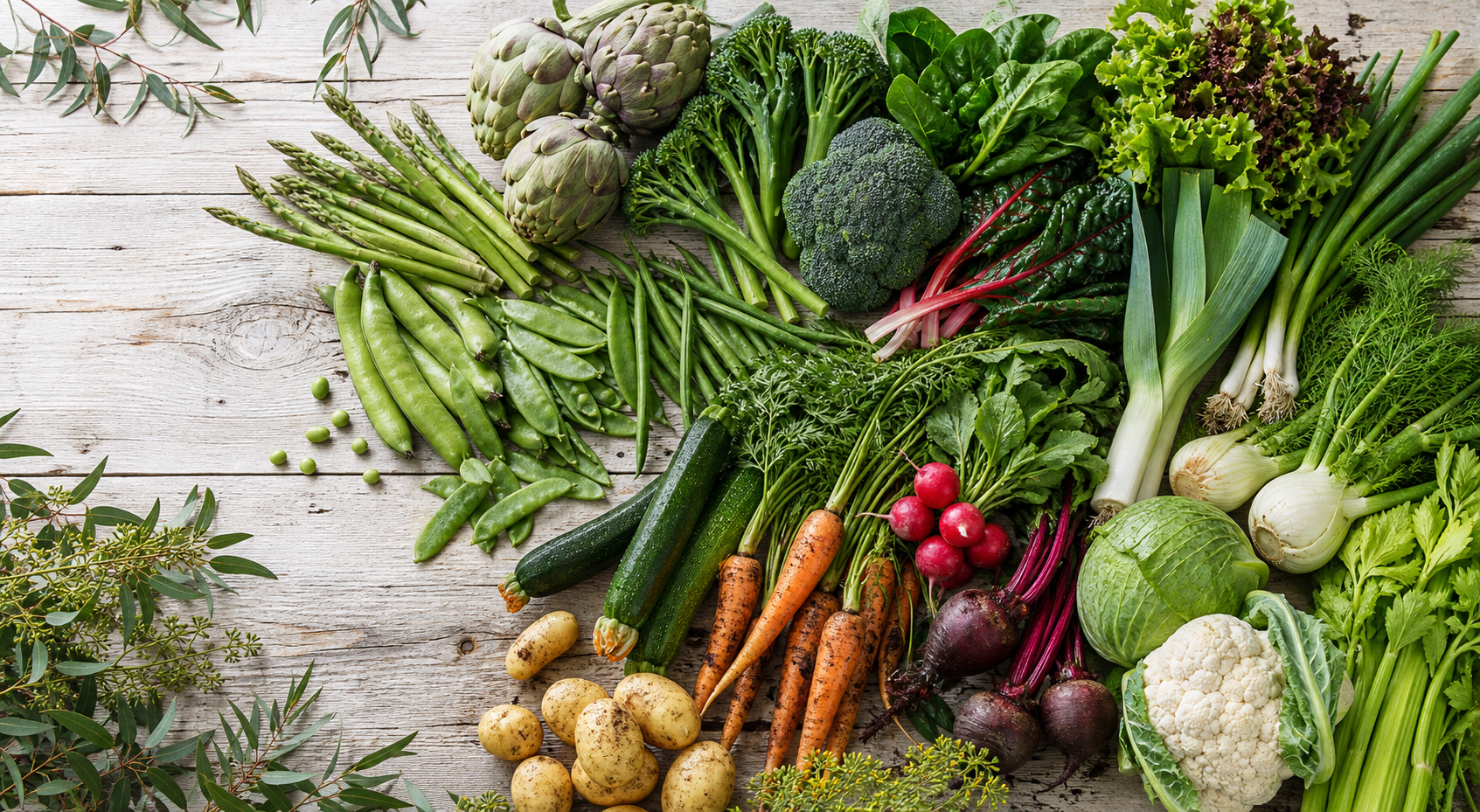
These examples show how seasonal indicators were effectively a living food calendar: not merely identifying what could be eaten, but connecting diet, ecological observation, cultural practice and the long-term care of Country.
Today, Australians can choose from an extraordinary and largely year-round protein catalogue: red meat, poultry, seafood, eggs and dairy; beans, lentils, chickpeas, tofu, tempeh, nuts and seeds; plus protein powders, fortified products, meat substitutes and, in some markets, insect-derived or cultivated-protein products.
Modern supply chains also separate us from seasonality.
A person can combine farmed salmon, cultured dairy, processed soy protein and almonds harvested months earlier in a single week, an everyday convenience made possible by refrigeration, processing and global supply chains.
Today at the local supermarket
Meat, fish, eggs and dairy generally provide highly digestible protein and all essential amino acids, while also supplying nutrients such as vitamin B12, iron, zinc, iodine, calcium or omega-3 fats depending on the food.
Many plant proteins bring fibre, unsaturated fats and useful phytochemicals, but some are lower in one or more essential amino acids, so a varied plant-based diet matters, particularly when animal foods are excluded.
Combining different plant foods over the day, such as legumes with grains, nuts or seeds, makes meeting protein and amino-acid needs entirely practical for most healthy people. Our listeners will know that Dr. Vincent and Stephen often talk about combining lots of coloured vegetables and fruits in our daily diets.
The health implication is that abundance creates both opportunity and risk.
Modern eaters can build a protein-rich diet around diverse, minimally processed foods, but need to take care not to drift towards processed meats, highly salted convenience foods and heavily marketed protein products that add little nutritional value beyond the label.
The useful lesson from our ancestors is to maintain diversity and a whole-food emphasis: rotate seafood, eggs, legumes, nuts, seeds, dairy if you eat it, and modest portions of unprocessed meat, while treating processed meat as an occasional food rather than a dietary foundation.
Lessons from First Nations people
On the Sydney Harbour foreshores of Gadigal Country, the Eora people drew on rich coastal food systems that included fish, shellfish and other locally available plants and animals.
This was not a fixed, month-by-month menu: knowledge of weather, tides, animal behaviour and plant cycles informed when and where food could be gathered.
Rather than treating First Nations knowledge as an ancient curiosity, it is better understood as detailed, place-based ecological knowledge, developed and maintained over countless generations. This knowledge existed long before Uber Eats, Woollworths Online and the Australia Bureau of Meteorology.
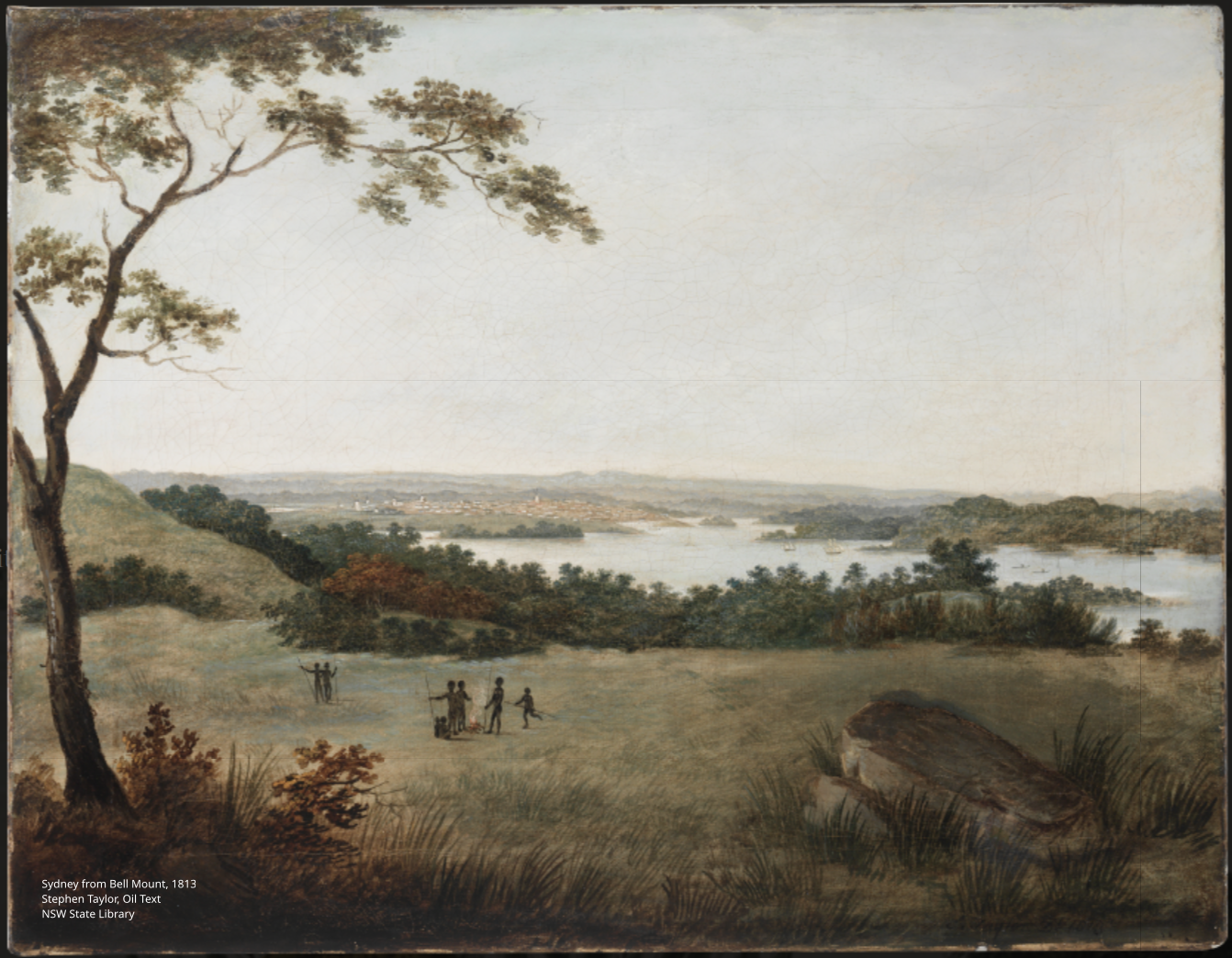
And you only need to be aware of the concepts of in-season eating to start seeing how easy it can be, and what benefits it brings.
Sydney golden wattle, Acacia longifolia, commonly flowers from winter into spring in coastal New South Wales. Wattle seeds have been used as food by Aboriginal peoples in many parts of Australia, often roasted and ground, but the use of individual species and the relevant cultural practices vary by Country.
For some Gadigal people, the appearance of the striking flowers of the Sydney Golden Wattle means that Snapper (Wal-lu-mai in local language) numbers are increased in Sydney Harbour.
This connected botanical observation to fishing practice, allowing people to target a plentiful local food at the right time rather than treating the harbour as an inexhaustible resource.
Maybe we should be noticing the seasons and considering what we eat accordingly?
Baking suggestion:
A high protein snack
Seeded cottage-cheese loaf
Makes: 1 small loaf, about 10 slices
Ingredients
250 g cottage cheese
4 large eggs
180 g rolled oats, blended into coarse oat flour
2 tsp baking powder plus ¡ tsp fine salt
2 tbsp chia seeds with 2 tbsp ground linseed
ij cup pumpkin seeds
ij cup sunflower seeds
1 tbsp sesame seeds, plus extra for the top
1 tbsp olive oil
Method
- Heat the oven 160řC fan-forced. Line a 20 cm loaf tin with baking paper.
- Blend the cottage cheese, eggs and olive oil until mostly smooth, although a few curds are perfectly fine.
- In a large bowl, combine the oat flour, baking powder, salt, chia, linseed, pumpkin seeds, sunflower seeds and sesame seeds. Add the cottage-cheese mixture.
- Stir until the batter is thick and evenly combined, then leave it for 10 minutes.
- This gives the oats and chia time to absorb moisture, which is what keeps the loaf from being wet in the middle.
- Spoon the mixture into the tin, smooth the top and scatter with a few extra sesame or pumpkin seeds.
- Bake for 40 to 50 minutes, until firm, golden and a skewer comes out clean. Rest for at least 20 minutes before slicing.
- It is particularly good toasted, with tomato, avocado, smoked fish, a poached egg or a spoonful of hummus.
Note: I don’t have a GF version this week but I’ll have a
think about it for the next podcast.
Protein: roughly 8 to 10 g per slice, depending on cottage
cheese and seed mix
Have you had your apple a day?
Renovatio’s An Apple A Day is a 30-tablet Australian-made supplement built around apple-derived phenolic compounds, or polyphenols, marketed as a convenient antioxidant product.
It is vegan, gluten-free and made from Australian Malus domestica apples, making it a straightforward option for people who want an apple-polyphenol extract without adding another powdered drink, capsule blend or multi-ingredient formula to the cupboard.
The product’s differentiator is its activated phenolics language.
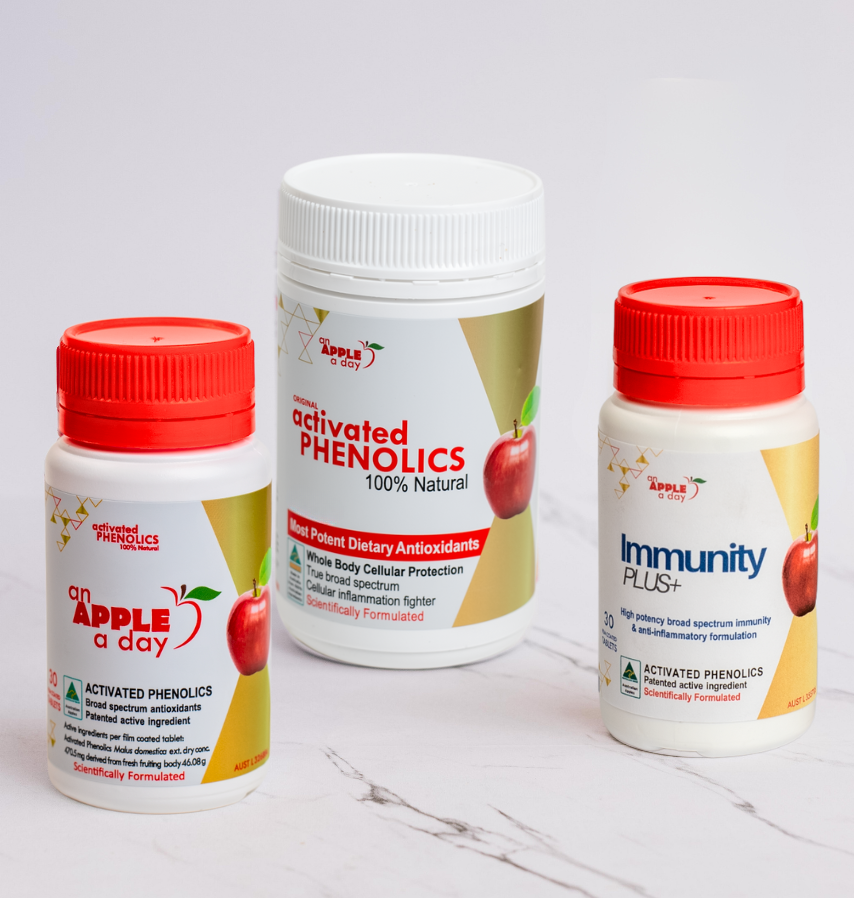
Apple antioxidants are extracted and activated for potency and absorption.
There is a evidence driven scientific basis for taking apple polyphenols seriously.
A recent systematic review found apple and apple-based interventions showed potential benefits for short-term vascular, glycaemic and antioxidant markers, while longer interventions suggested changes in gut microbiota.
The broader research on polyphenol supplements suggests modest improvements in some cardiometabolic markers are possible, but results differ by compound, dose and study population.
Visit our website to learn more - Click here to learn more about an APPLE a day, one of the world’s most potent antioxidant.
Meet your hosts
Your hosts for After Hours with Dr Vincent are Vincent
and Stephen!
Vincent’s is passionate about good health and longevity,
and believes that good health shouldn’t be complicated,
gatekept, or expensive. He has seen first hand that
science can be kind, and that we all learn better when
we’re learning together.
We all deserve to be healthier and happier.
Stephen is a widely travelled IT leader who is always curious. He consults to a number of startup businesses, helping make the Internet a safer place to do business. He lives in the Inner West of Sydney with his wife and their two cats.

About this newsletter and podcast
This newsletter is produced weekly to accompany the After Hours with Dr. Vincent and Stephen podcast, available everywhere you get your podcasts. Focused on health, longevity and the occasional technical discussion, Dr. Vincent and Stephen run live to Instagram and TikTok, then post production to all other platforms.
The newsletter is written in LaTeX and published in PDF and HTML. Podcast/Vodcasts are compiled using OpenSource tools on a Linux platform. Stephen uses a qwen3.6 model LLM running with ollama, OpenwebUI and comfyUI for images. This newsletter is entirely self-funded.
______________________________________________
You’re receiving this weekly newsletter because you’re one of
our very special subscribers! If you’re not currently a
subscriber, head to our page on Substack for more of our
content, free downloads and special subscriber offers.
Ask Dr.Vincent on Substack
Want to sponsor?
Both Dr. Vincent and Stephen are thrilled you’re interested in supporting this platform. You can reach out to us by emailing hello@askdrvincent.com asking for more information around sponsorship of the podcast, the newsletter, or both! Your support keeps us on air.
We’re also available for speaking engagements at conferences or meetups pending availability and an engagement agreement.
Looking for our online newsletter?
Stephen and Dr. Vincent have given the newsletter a bit of a glow up, and after some feedback from some of our regular readers we’ll also publish a web version of this newsletter. Same content, same images, same Dr. Vincent - just in your favourite browser.
Head over to After Hours Online for the latest newsletter.
ľ 2026 Dr Vincent and Stephen. All rights reserved. Brief excerpts may be shared with attribution and a link to askdrvincent.com.