After Hours Newsletter
I’m too sexy for my....
Dr. Vincent and Stephen love a good tune to bop along
to during the day. This week we discuss sexiness
and it got Stephen thinking, what’s a good sexy
song?
Email us with your thoughts at hello@askdrvincent.com.
Stephen’s offering is a song from one of his favourite movies, Be Cool with John Travolta - Sexy by the Black Eyed Peas. Check it out!
Contents
Last week, on the podcast
The science of being sexy: looks, confidence and the stories people tell
Attractiveness might get someone noticed, but what makes them sexy?
In this week’s After Hours with Dr Vincent, Dr Vincent and Stephen approach that question from different directions. Dr Vincent wants to know why improving someone’s appearance attracts judgement when improving other skills earns applause.
But Stephen keeps pressing a different distinction: beauty and sexiness are not necessarily the same thing.
Between gym routines, celebrity reputations and an unexpected excursion into astrology, their conversation becomes less about identifying attractive features and more about understanding the assumptions attached to them.
The starting point is Dr Vincent’s frustration with criticism of the Kardashian-Jenner family and the apparent double standard surrounding cosmetic enhancement.
Why, he asks, should learning basketball or piano count as worthwhile self-improvement while changing an appearance through fillers, Botox or surgery invites disapproval?
Stephen shifts the discussion from the method to the motive.
Who is the improvement for: the individual, the people around them or an audience whose approval has become too important?
Dr Vincent’s own experience complicates the answer.
He describes joining a friend’s gym intending to offer a month of support, only to discover a routine he now genuinely enjoys.
The attraction is not simply exercise: the coaches, fellow members and social interaction leave him feeling recharged even when physically tired.
He also reports better posture, better-fitting clothes and more favourable treatment in everyday encounters. Asked whether that makes him sexier, he offers a more certain answer: it makes him more confident.
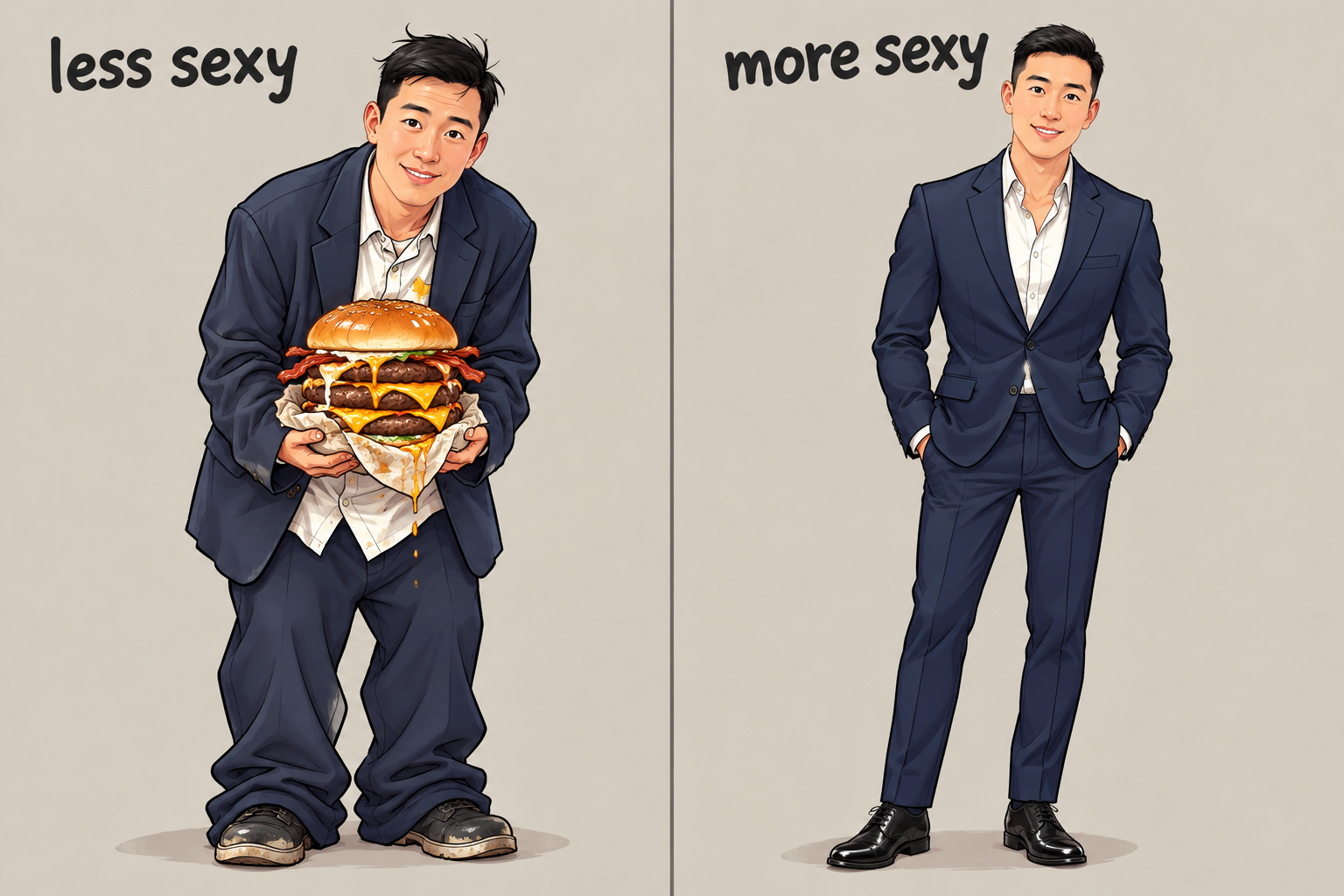
That confidence does not settle Stephen’s concern about external validation. Dr Vincent sees compliments as legitimate encouragement, something that can help sustain a healthy routine rather than automatically signal vanity.
Stephen asks whether pursuing appearance can go too far.
Their disagreement is more a difference of emphasis than an outright clash: Dr Vincent defends the pleasure and motivation of being noticed, while Stephen keeps returning to the possibility that healthy self-improvement can cross an unhealthy line.
Neither establishes exactly where that line sits.
Where the disagreement gets interesting
Stephen’s clearest challenge concerns the language of attraction.
Someone need not possess classical beauty to be sexy, he argues, and recognising another person’s sex appeal need not mean wanting a sexual relationship with them.
Dr Vincent questions whether sexy can really function platonically, given its connection to sex.
They find firmer agreement on the practicalities of compliments: appreciating someone’s appearance privately is different from choosing words that might make them uncomfortable. Praising a dress or a pair of shoes offers considerably less room for misunderstanding.
Appearance also comes with a story, and Dr Vincent supplies an unusually candid example.
Revisiting clips from the movie Salt, he realises that his earlier allegiance to Jennifer Aniston had coloured his assessment of Angelina Jolie’s performance.
Stephen’s distinction between beauty and sexiness becomes useful here: what someone sees is entangled with what they believe about the person, their public identity and the roles through which they know them.
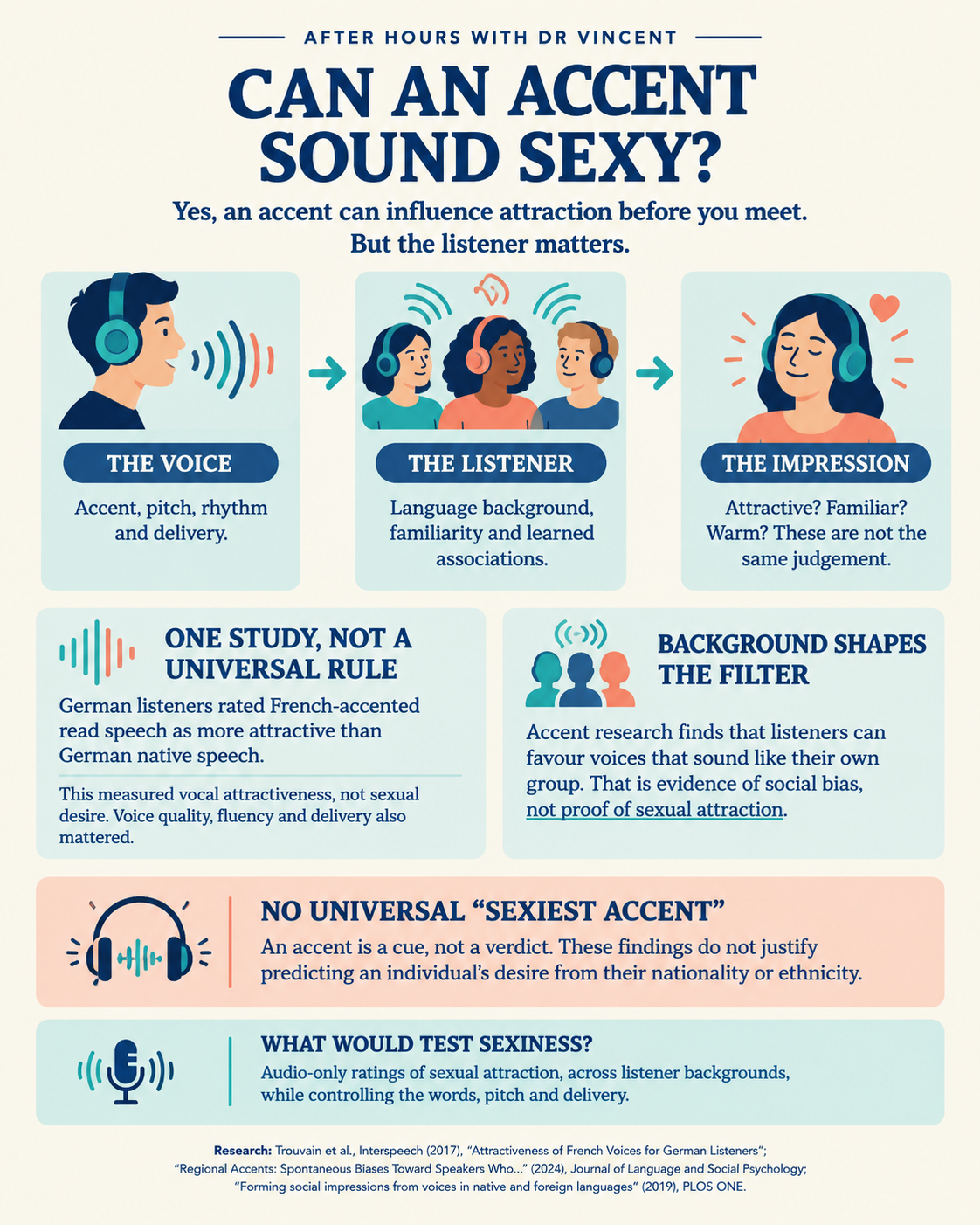
The sound of someone’s voice adds another complication.
Dr Vincent objects to coaching that promises to make executives sound more authoritative by changing something he regards as deeply personal.
Yet he immediately acknowledges the tension in his own position, wondering whether David Beckham would be perceived differently with a different voice.
Lady Gaga provides his counterexample to a narrowly visual account of attraction: vocal ability and artistry contribute to the whole impression.
Both hosts broaden the discussion to humour, wit, skills and even smell, leaving looks as one element rather than the entire proposition.
Their sharpest disagreement arrives when Dr Vincent imagines the advantages available to exceptionally good-looking people.
Stephen pushes back against the suggestion that beauty means a red carpet through life.
Attractive people still face ordinary difficulties, he argues, and may encounter people seeking to exploit their appearance.
Dr Vincent accepts the broader point, recalling a school friend who found ridicule about being underweight as hurtful as he found ridicule about being overweight.
What looks enviable from outside can conceal a very different experience.
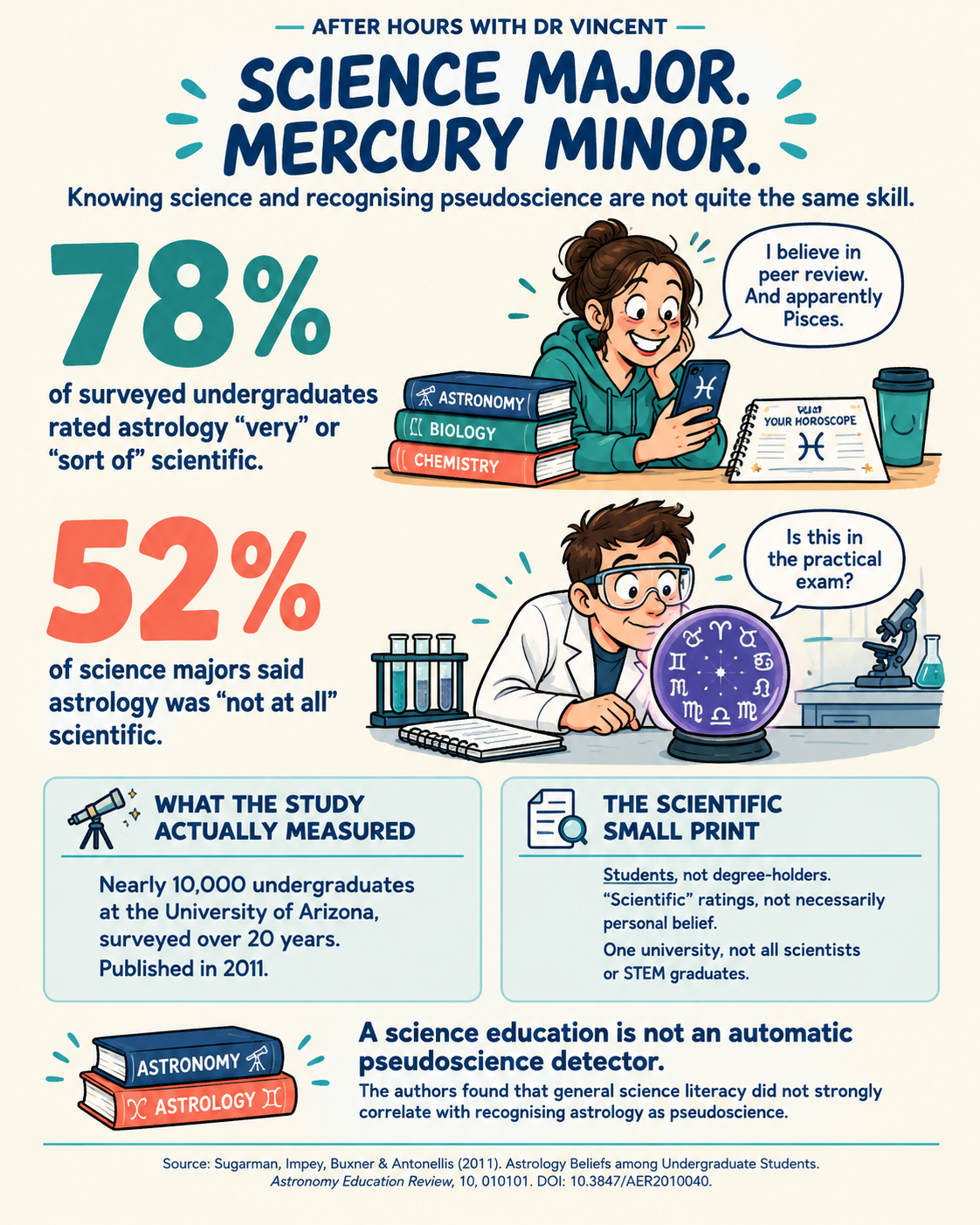
Astrology then tests the boundary between evidence and interpretation.
Stephen introduces star signs as an example of information that might influence attraction before two people properly know each other. Dr Vincent objects forcefully when astrology and scientific language enter the same discussion.
Stephen’s eventual defence is narrower: he values a horoscope as a source of hope, not a sound basis for rejecting a potential partner. Their positions overlap on that practical conclusion, although Dr Vincent remains distinctly less sympathetic to the detour.
The same question about preconceptions carries into suburbs and dating profiles.
Neither host thinks an address should determine sex appeal, but Stephen asks whether assumptions about where someone lives nevertheless shape the first conversation.
Dr Vincent advocates meeting people both online and in person, while treating dating profiles as truthful self-presentation rather than misleading advertising.
The parade of men posing with fish provides the comic illustration: a photograph intended to communicate achievement may not deliver quite the message its owner imagines.

What remains unanswered
By the close, both hosts resist reducing attraction to a checklist of symmetrical features.
Stephen questions symmetry as a universal standard; Dr Vincent argues that an admired nose, mouth or set of teeth cannot be separated from the face it belongs to.
Asked directly whether someone without conventional good looks can be sexy, Dr Vincent answers yes.
Drawing on his own experience of feeling unattractive when younger, he credits courtesy, humour, hard work and greater comfort with himself for making him feel more attractive now.
The outstanding questions concern boundaries and evidence rather than a final verdict on beauty.
- When does improving appearance become an unhealthy pursuit of approval?
- How much does attractiveness actually change someone’s opportunities, and what disadvantages accompany it?
- Can the hosts separate the effects of looks from confidence, reputation and social assumptions?
Sexy fruit, longevity and Fertility.
Apparently, even the fruit bowl needs cultural awareness training.
What looks sexy in one setting can mean something rather different in another. The secret ingredient is context, not simply a suggestively positioned banana.
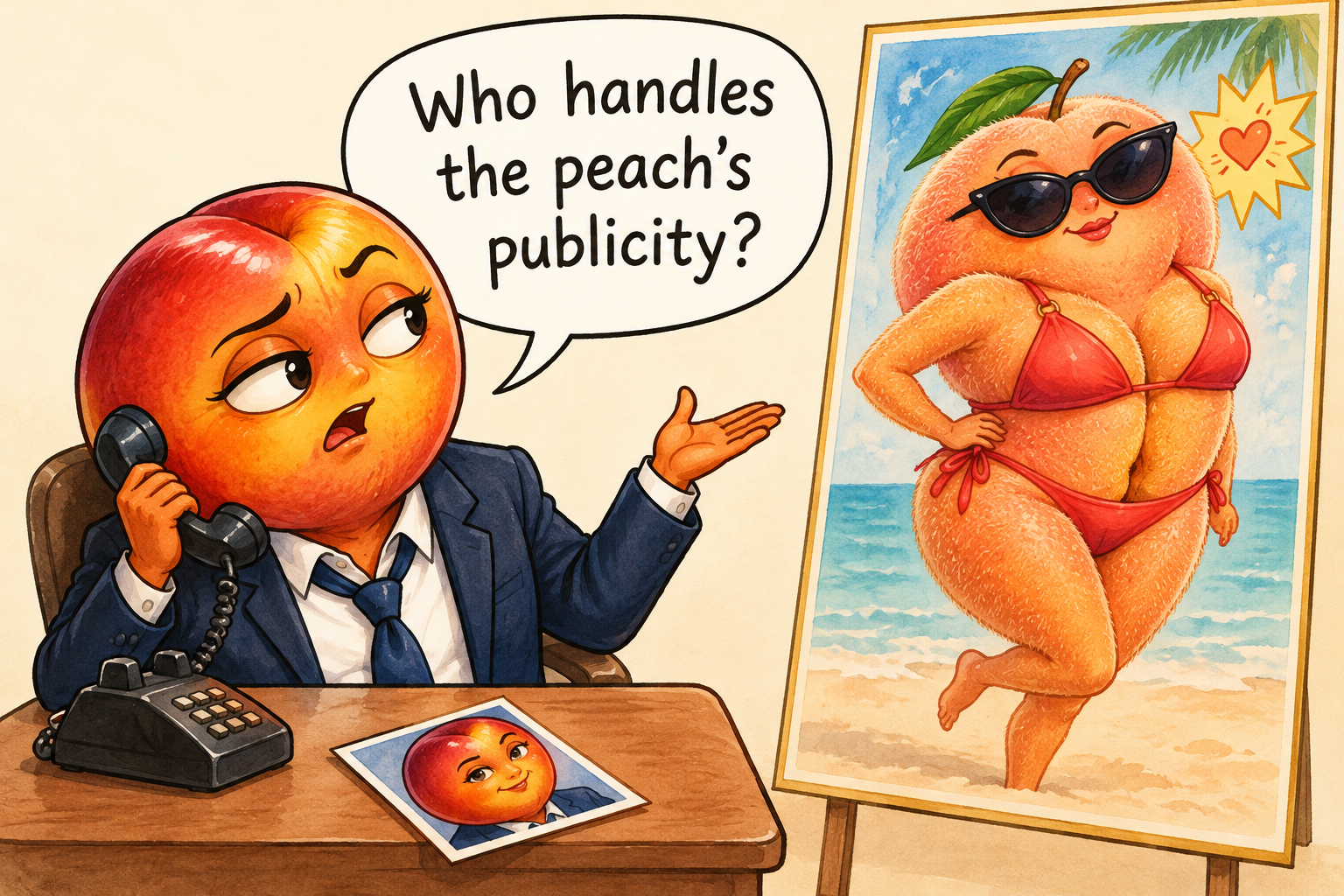
Take the peach. In contemporary emoji culture, its distinctive cleft commonly stands in for buttocks. A perfectly respectable stone fruit has effectively acquired a second career in flirting.
Somewhere, a nectarine is wondering who handles its publicity. But we all need to feel a little sorry for the durian. Spiky exterior, famously divisive aroma and the general demeanour of someone who considers deodorant a conspiracy.
If the nectarine needs a publicist, the durian needs crisis communications and a hostage negotiator.
In traditional Chinese art, however, peaches carry a strong association with longevity and immortality. The Queen Mother of the West’s mythical orchard produced peaches that bestowed immortality.
Less "nice bottom", more "many happy returns". Neither interpretation cancels the other; the setting changes the message.
Then there is the pomegranate, which brought considerably more symbolism to ancient Mediterranean tables.
In Greek and Roman traditions, it represented fertility and was associated with Aphrodite, goddess of love, and Hera, goddess of marriage and childbirth. Those abundant seeds were doing some serious metaphorical work.
The distinction matters: fertility symbolism is not the same as finding fruit sexually attractive. But across these traditions, fruit offers a wonderfully revealing shorthand for bodies, desire and reproduction. Perhaps the sexiest thing in the bowl is interpretation.
Phenolics and Why They Matter
An apple contains more than fibre, vitamins and natural sugars.
It also contains phenolics: a diverse group of plant compounds, including flavonoids and phenolic acids, that help plants respond to environmental stresses and contribute to their colour, bitterness and astringency.
These compounds are often described as antioxidants because many can react with free radicals in laboratory tests. In the human body, however, their potential effects extend beyond simply neutralising these molecules. Research suggests that some phenolics, and their breakdown products, can:
- Influence the signals that regulate inflammation
- Help regulate the body’s own antioxidant defence systems
- Interact with gut microbes, which transform them into smaller, potentially active compounds
- Affect processes involved in blood vessel function and glucose metabolism
These effects depend on the compound, the amount consumed and how the body processes it. Test-tube results do not automatically translate into health benefits, and having more reactive sites does not make phenolics inherently better or safer than vitamin C.
Under some conditions, phenolics can promote oxidation rather than reduce it.
Our cells naturally produce reactive molecules during normal metabolism, and some perform useful signalling roles.
Oxidative stress occurs when their production exceeds the body’s capacity to manage them, potentially damaging fats, proteins and DNA. It is involved in ageing, cardiovascular disease and insulin resistance, but this does not mean that taking more antioxidants will prevent these problems.
The aim is balance, not the elimination of every reactive molecule.
The amount of phenolics in an apple or extract is therefore only the starting point. They must first be released during digestion. Some are absorbed and modified by the gut and liver; others reach the large intestine, where microbes produce breakdown products that may also have biological effects.
The useful question is not simply, "How much antioxidant does this contain?" but, "What happens to it during digestion, and what does it actually do in the body?"
The Difference: Activated Phenolics
Getting phenolics out of an apple is one challenge.
Making them available for the body to use is another. Think of the apple’s cells and fibre as packaging: extraction opens that packaging and collects the compounds inside.
During his PhD research at the University of Newcastle, Dr Vincent developed a new approach: a water-based technology that extracts phenolics from apples without organic solvents.
The process was subsequently patented and commercialised, with the resulting ingredients marketed as “activated phenolics”.
The distinction is in the process.
Digestion is the next test.
Extracted phenolics still encounter digestive fluids, enzymes and gut microbes, which influence what becomes available for absorption and how the compounds are transformed. Extracting them is not the same as delivering them unchanged to cells.
Extraction matters. Digestion matters. A natural process matters.
But the real measure is what follows: which compounds the body can use, and whether they produce a meaningful benefit.
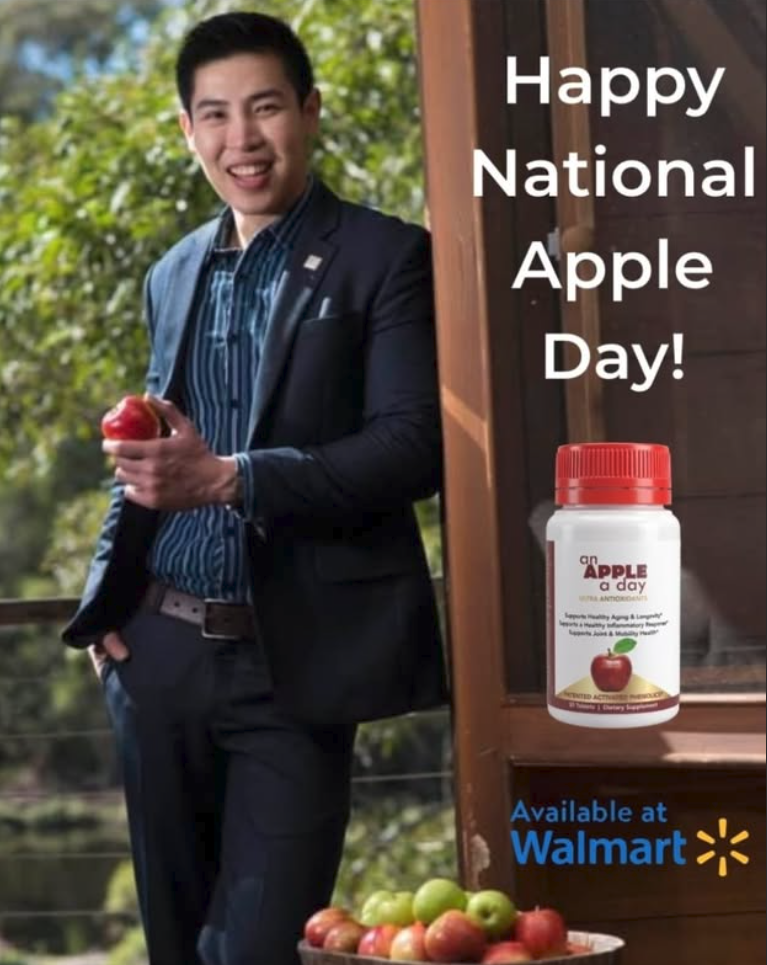
Have you had your An Apple a Day?
Meet your hosts
Your hosts for After Hours with Dr Vincent are Vincent
and Stephen!
Vincent’s is passionate about good health and longevity,
and believes that good health shouldn’t be complicated,
gatekept, or expensive. He has seen first hand that
science can be kind, and that we all learn better when
we’re learning together.
We all deserve to be healthier and happier.
Stephen is a widely travelled IT leader who is always curious. He consults to a number of startup businesses, helping make the Internet a safer place to do business. He lives in the Inner West of Sydney with his wife and their two cats.

About this newsletter and podcast
This newsletter is produced weekly to accompany the After Hours with Dr. Vincent and Stephen podcast, available everywhere you get your podcasts. Focused on health, longevity and the occasional technical discussion, Dr. Vincent and Stephen run live to Instagram and TikTok, then post production to all other platforms.
The newsletter is written in LaTeX and published in PDF and HTML. Podcast/Vodcasts are compiled using OpenSource tools on a Linux platform. Stephen uses a qwen3.6 model LLM running with ollama, OpenwebUI and comfyUI for images. This newsletter is entirely self-funded.
_________________________________________________________________________
You’re receiving this weekly newsletter because you’re one of
our very special subscribers! If you’re not currently a
subscriber, head to our page on Substack for more of our
content, free downloads and special subscriber offers. Ask
Dr.Vincent on Substack
Want to sponsor?
Both Dr. Vincent and Stephen are thrilled you’re interested in supporting this platform. You can reach out to us by emailing hello@askdrvincent.com asking for more information around sponsorship of the podcast, the newsletter, or both! Your support keeps us on air.
We’re also available for speaking engagements at conferences or meetups pending availability and an engagement agreement.
Looking for our online newsletter?
Stephen and Dr. Vincent have given the newsletter a bit of a glow up, and after some feedback from some of our regular readers we’ll also publish a web version of this newsletter. Same content, same images, same Dr. Vincent - just in your favourite browser.
Head over to After Hours Online for the latest newsletter.
ľ 2026 Dr Vincent and Stephen. All rights reserved. Brief excerpts may be shared with attribution and a link to askdrvincent.com.